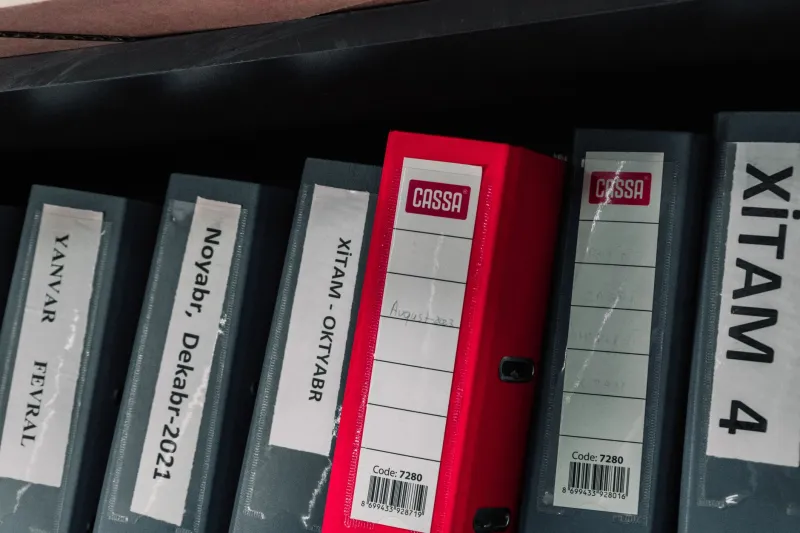
Dormant No More: Turning Your Organization's Archived Research Into a Living Strategic Resource

Somewhere inside your organization—buried in a shared drive, stacked in a project archive, or languishing in an email folder nobody monitors—sits a body of research your leadership team has likely forgotten exists. Consumer studies commissioned during a product launch. Competitive landscape analyses prepared ahead of a strategic planning cycle. Brand perception surveys conducted before a major campaign. Each of these documents represented a meaningful investment at the time. Most have not been opened since.
This is not a minor inefficiency. For many mid-size and large U.S. enterprises, the cumulative value of unreviewed research runs into the hundreds of thousands of dollars—sometimes more. Yet the instinct when new strategic questions arise is rarely to excavate the archive. It is to commission something fresh. The result is a cycle of redundant spending that systematically undervalues one of the most accessible intelligence resources a company already owns.
Resurrecting that value requires more than good intentions. It demands a structured methodology—one that treats historical research not as a static record of what was true, but as raw material that can be reinterpreted against current market realities.
Why Archived Research Has More Value Than Most Organizations Recognize
The conventional assumption is that older research is outdated research. There is some truth to that. Consumer sentiment surveys from five years ago will not accurately reflect today's purchasing behavior. Competitive analyses conducted before a major market entrant arrived are no longer complete pictures of the landscape.
But this framing misses something important. Historical research provides baseline data that current studies often cannot replicate. It captures market conditions, consumer attitudes, and competitive dynamics at a specific moment in time—a snapshot that becomes increasingly valuable as context shifts. When layered against more recent information, archived studies enable trend identification, directional analysis, and longitudinal insight that no single new study can produce on its own.
A consumer perception study from 2019, for instance, may seem obsolete. But paired with a 2022 tracking survey and current brand health data, it becomes part of a three-point trajectory that reveals meaningful patterns about how customer relationships have evolved. That kind of longitudinal intelligence is difficult and expensive to construct from scratch. Organizations that have simply preserved their prior work already possess the raw materials.
Building a Research Inventory: The First Practical Step
Before any recontextualization can occur, organizations must know what they actually have. Surprisingly few do. Research assets are typically scattered across departments, stored in inconsistent formats, and labeled in ways that make systematic retrieval difficult. The first step in recovering their value is creating a centralized inventory.
An effective research catalog should document each study's original purpose, methodology, sample characteristics, date of completion, and key findings. Equally important is capturing the strategic question the research was designed to answer—because that framing determines how the work can be repurposed. A study commissioned to evaluate a specific product concept may contain attitudinal data about a broader customer segment that has nothing to do with the original product but is highly relevant to a current initiative.
For organizations with large research archives, this cataloging effort is best approached as a structured project with dedicated ownership, clear taxonomy, and a searchable repository as the deliverable. The goal is not merely to know what exists, but to make the archive discoverable and queryable by the teams who need it.
Recontextualization: The Discipline of Reading Old Data Through New Lenses
Cataloging tells you what you have. Recontextualization determines what it is now worth.
This process involves systematically revisiting archived findings and asking a different set of questions than those the original research was designed to answer. Has the market condition the study described changed materially—and if so, in what direction? Do the findings support or challenge what your organization currently believes about its customers, competitors, or category? Are there data points in the study that were secondary to the original purpose but are now directly relevant to a current strategic decision?
This kind of structured re-reading requires analytical discipline. It is easy to either dismiss older research as irrelevant or, conversely, to selectively mine it for confirmation of existing positions. Neither approach serves the organization well. The more rigorous method involves treating archived research with the same critical scrutiny applied to new findings—evaluating methodology, noting sample limitations, and flagging where conditions have shifted enough to render specific conclusions unreliable.
In many cases, the most valuable output of recontextualization is not a definitive answer, but a sharper question. Archived research often reveals gaps, contradictions, or unexpected patterns that point toward where new, targeted investigation would yield the highest return. That intelligence shapes more efficient research investment going forward.
Establishing a Review Cadence: Making Recontextualization Systematic
One-time archive recovery projects have limited long-term impact if the underlying behaviors do not change. The organizations that extract sustained value from their historical research are those that build review cadences into their intelligence processes.
This means scheduling periodic reassessments of the archive—not exhaustive re-reads of every document, but structured reviews triggered by strategic events. When a new planning cycle begins, when a significant competitive development occurs, or when a major customer initiative is being scoped, the archive review should be a standard early step. The question should always be: what do we already know that is relevant here, and how has the context around that knowledge changed?
Some organizations formalize this through a research stewardship function—a role or team responsible for maintaining the catalog, flagging relevant historical work when strategic questions arise, and managing the process of recontextualization. Others integrate it into existing market intelligence workflows. The specific structure matters less than the consistency of execution.
The Cost Equation: What Systematic Archive Use Actually Saves
The financial case for this approach is straightforward. A well-executed consumer segmentation study typically costs between $40,000 and $150,000 depending on scope and methodology. A competitive landscape analysis at the enterprise level can run considerably higher. When organizations commission new versions of these studies without first determining whether prior work addresses the same questions, they are paying full price for insights they may already own.
More subtly, the cost of not revisiting archives is not just financial. It is strategic. Decisions made without the benefit of historical context are more vulnerable to recency bias—the tendency to overweight recent developments and underestimate longer-term patterns. Organizations that systematically consult their own longitudinal record are better positioned to distinguish genuine market shifts from short-term noise.
The Archive as a Competitive Asset
There is a final dimension worth noting. The depth and quality of an organization's research archive is itself a form of institutional advantage. Companies that have been rigorous about commissioning, preserving, and revisiting intelligence over time have accumulated a proprietary knowledge base that competitors cannot easily replicate. That archive reflects years of investment in understanding customers, markets, and competitive dynamics—and its value compounds when managed with discipline.
The organizations that treat their archives as living resources rather than static records are the ones best positioned to make faster, more confident decisions when market conditions shift. In a business environment where the cost of delayed or uninformed decisions continues to rise, that capacity is not a minor operational improvement. It is a meaningful strategic edge.