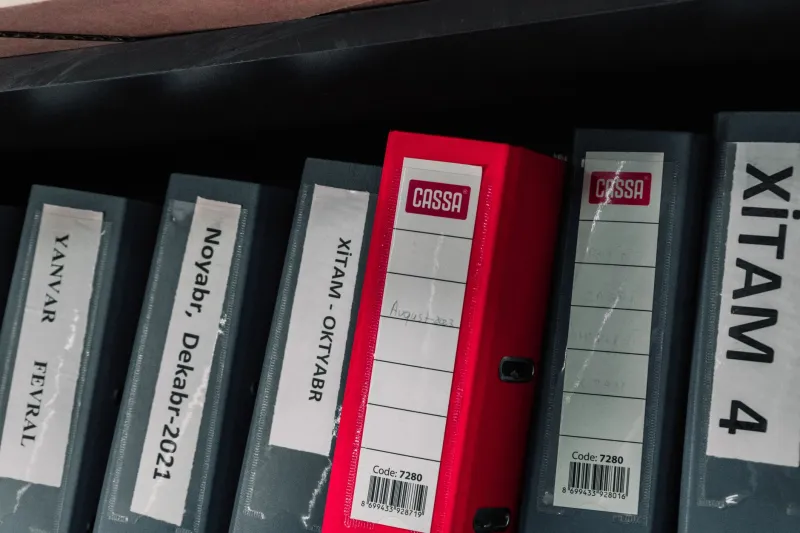
Before You Buy Another Tool: The Case for Auditing What Your Organization Already Knows

The impulse is understandable. A new platform promises cleaner dashboards, faster data pipelines, and AI-assisted synthesis. The vendor demo is compelling. The procurement cycle begins. And somewhere in a shared drive—or perhaps a legacy server no one has touched in three years—sits a comprehensive customer segmentation study commissioned at significant expense, its findings never fully absorbed, its data never fully leveraged.
This is not an edge case. It is one of the most persistent and costly patterns in corporate intelligence management. Before any organization adds to its research infrastructure, it must first account for what that infrastructure already contains.
The Accumulation Problem
Over time, organizations do not build intelligence systems so much as they accumulate them. A market entry study commissioned in 2018. A brand perception survey fielded in 2021. Competitive landscape reports produced annually by a previous vendor. Customer journey mapping conducted by a consulting firm whose engagement ended abruptly. Syndicated data subscriptions maintained out of institutional habit rather than demonstrated utility.
Each of these assets represented meaningful investment at the time of creation. Together, they constitute what might be called an organization's intelligence estate—a sprawling, often uncharted body of knowledge that grows in volume even as its accessibility and relevance erode.
The problem is not merely that this material goes unused. It is that organizations continue spending on new research to answer questions that existing research may already address. Without a systematic inventory, there is no reliable way to know the difference.
What an Intelligence Audit Actually Involves
An effective audit of your intelligence infrastructure is a structured diagnostic process, not a file-organization project. It requires deliberate methodology and cross-functional participation. The goal is not simply to catalog what exists, but to evaluate each asset against current strategic priorities and determine its residual value.
The process typically unfolds across four distinct phases.
Discovery and Cataloging
The first phase requires a comprehensive sweep of all repositories where research assets may reside. This includes formal knowledge management systems, departmental shared drives, email archives, vendor portals, and—critically—the informal knowledge held by long-tenured employees who may be the only people aware that certain studies were ever conducted. Every asset identified should be logged with basic metadata: subject matter, methodology, fieldwork dates, commissioning department, and original purpose.
Relevance Assessment
Once cataloged, each asset must be evaluated for its current strategic applicability. Research that was highly relevant in 2019 may describe a market that no longer exists. Consumer attitudes captured before a major disruption—a pandemic, a regulatory shift, a category-defining new entrant—may reflect conditions that have since been fundamentally altered. The relevance assessment should be conducted against your organization's current strategic agenda, not the agenda that existed when the research was originally commissioned.
Quality and Methodological Review
Not all legacy research is created equal. Sample sizes, geographic scope, methodological rigor, and vendor credibility vary considerably across a typical organization's accumulated assets. A study that was considered adequate for its original purpose may not meet the standards required for a new application. This review phase separates research that can be confidently cited or reactivated from research that carries too much methodological uncertainty to be relied upon.
Gap and Redundancy Mapping
The final phase synthesizes the findings of the previous three into a strategic map of your intelligence landscape. This map identifies two categories of concern: gaps, where your organization lacks current, high-quality intelligence on topics that matter to near-term decisions; and redundancies, where multiple assets address the same questions with overlapping findings that could be consolidated. Both categories have direct implications for how future research budgets should be allocated.
The Hidden Value of Legacy Research
One of the more counterintuitive findings of a rigorous audit is that legacy research often contains significant untapped value—not as a substitute for current intelligence, but as a longitudinal baseline. A brand perception study from 2017, taken in isolation, may offer limited utility. But paired with a similar study conducted in 2023, it provides something that no amount of new research can replicate: a documented trajectory of change over time.
Organizations that have maintained consistent research programs, even imperfectly, possess a form of competitive advantage that is rarely recognized. Their historical data allows them to distinguish between short-term fluctuations and durable trends—a distinction that is increasingly valuable in volatile market conditions. The audit process often surfaces these longitudinal assets for the first time, revealing historical threads that can meaningfully inform current strategic analysis.
Decommissioning with Intention
Not every asset will survive the audit. Some research is simply too dated, too methodologically compromised, or too narrowly scoped to retain strategic value. Decommissioning these assets is not an acknowledgment of failure—it is an act of organizational discipline.
Retaining obsolete research in active repositories creates its own risks. Analysts working under time pressure may reach for available material without fully scrutinizing its vintage or applicability. Outdated findings can quietly shape strategic assumptions, particularly when they confirm prevailing beliefs. A clean, well-curated intelligence library is more useful than a large, undifferentiated archive.
Decommissioned assets need not be destroyed. A separate archive with appropriate documentation preserves the institutional record without cluttering the operational intelligence environment.
The Audit as Investment Discipline
Perhaps the most direct argument for conducting a systematic intelligence audit is financial. Research investments are rarely modest. Syndicated data subscriptions, primary research programs, and analytical platforms collectively represent substantial line items in most corporate budgets. Allocating those resources without a clear picture of what already exists is, at minimum, imprecise—and in many cases, it is genuinely wasteful.
Organizations that approach intelligence investment with the same rigor they apply to capital expenditure decisions make better choices. They avoid commissioning research that duplicates existing findings. They identify subscription services that are no longer earning their cost. They direct new investment toward genuine gaps rather than comfortable repetition of familiar questions.
The audit does not replace the need for ongoing research investment. Markets evolve. Consumer behavior shifts. Competitive dynamics change in ways that no historical dataset can fully anticipate. But it ensures that new investment is additive rather than redundant—that each dollar spent on intelligence is genuinely expanding your organization's understanding rather than retracing ground already covered.
A Prerequisite, Not an Option
For organizations considering significant new investments in research platforms, analytical capabilities, or intelligence programs, the audit should be treated as a non-negotiable prerequisite. The findings will almost certainly alter the investment thesis—sometimes by revealing that the anticipated gaps are smaller than assumed, sometimes by surfacing entirely different priorities than those originally identified.
Intelligence that drives decisions begins with knowing what you already know. That is not a trivial starting point. It is the foundation on which every subsequent research investment should be built.