Buried Findings: Why Organizations Keep Paying for Research They Already Own
In virtually every major U.S. corporation, there exists a version of the same quiet catastrophe. A business unit commissions a consumer segmentation study. The findings are presented, a deck is distributed, and the engagement is closed. Eighteen months later, a different team—facing a comparable strategic question—hires an outside firm to conduct nearly identical research. Nobody intended this outcome. Nobody remembers the first study well enough to prevent it.
This is not an anecdote. It is a pattern, and its costs are substantial. Research redundancy, contradictory findings that emerge when parallel studies use inconsistent methodologies, and the gradual erosion of institutional memory collectively represent one of the most underexamined sources of organizational waste in corporate America. The problem is not that companies fail to generate intelligence. It is that they have built no reliable mechanism for learning from it.
The Architecture of Forgetting
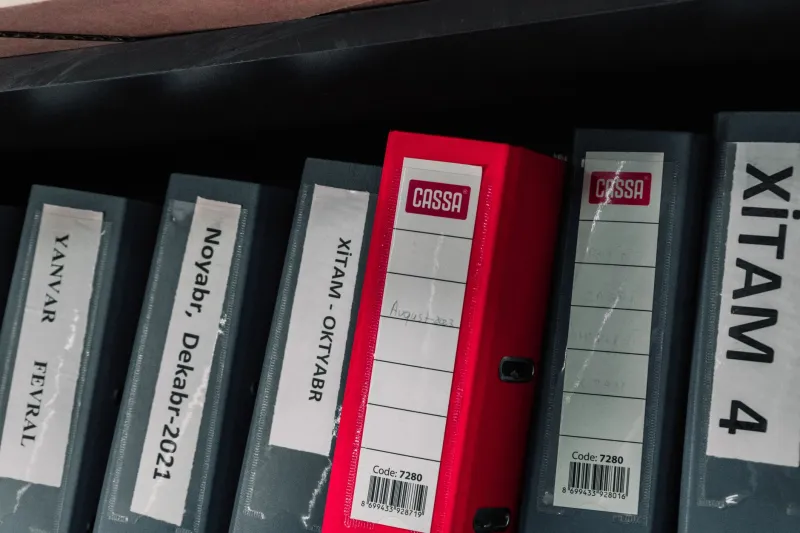
To understand why research disappears, it helps to examine how most organizations actually store it. The typical enterprise knowledge environment is a loose confederation of shared drives, email threads, project management platforms, and departmental file systems that operate independently of one another. A study commissioned by the marketing division may never reach the strategy team. Research conducted for a product launch may be inaccessible to the team managing the same product category three years later.
This fragmentation is rarely the result of negligence. It is the predictable outcome of organizational structures that assign research ownership to individual projects rather than to the enterprise itself. When a study is framed as a deliverable for a specific initiative—rather than as an addition to a cumulative knowledge base—the incentive to preserve and share it evaporates the moment the initiative concludes.
Compounding this is the role of personnel turnover. The institutional memory of most research functions resides not in documented systems but in the minds of individual employees. When those employees leave, their contextual understanding of prior findings—which studies are credible, which methodologies produced reliable results, which questions remain unresolved—leaves with them. What remains in the archive is often technically complete but practically inert.
Incentive Misalignment and the Project Mentality
There is a deeper structural issue at work. In most organizations, the incentive architecture surrounding research rewards completion rather than utilization. A team that successfully delivers a research report on schedule has met its objective, regardless of whether anyone acts on the findings or whether those findings are ever retrieved again. There is no accountability mechanism for the downstream fate of intelligence once it has been formally presented.
This creates what might be called a project mentality—a disposition toward research as a series of discrete, self-contained engagements rather than as an ongoing, compounding process. Under this mentality, each study begins from scratch, reinventing methodological frameworks, re-establishing baseline assumptions, and re-asking questions that prior research may have already answered. The cumulative cost of this approach is enormous, both in direct expenditure and in the strategic opportunities that compound knowledge would have revealed.
External research vendors are not immune from contributing to this dynamic. Firms that are retained on a project basis have limited incentive to invest in the client's longitudinal intelligence architecture. Their engagement ends when the deliverable is submitted. The organizational infrastructure required to convert that deliverable into durable institutional knowledge is the client's responsibility—and it is a responsibility that most clients have not formally accepted.
What a Living Research Knowledge Base Actually Requires
Reversing these patterns demands more than a better file-naming convention. It requires a deliberate reconceptualization of what research infrastructure means at the enterprise level.
The first requirement is centralized discoverability. Research assets must be stored in a system that is searchable across business units, indexed by topic, methodology, date, and strategic relevance, and accessible to anyone with a legitimate need to consult them. This does not necessitate a single monolithic platform, but it does require that the organization maintain a master index—a research registry—that allows any team to determine, before commissioning new work, what has already been learned on a given subject.
The second requirement is structured synthesis. Raw research reports are rarely sufficient for organizational learning. They need to be distilled into formats that preserve key findings, highlight methodological limitations, and flag questions that remain open. This synthesis function is often underestimated. It requires analytical judgment, not just administrative effort, and it should be assigned to individuals with the expertise to evaluate what a study actually demonstrated versus what it merely suggested.
The third requirement is temporal tagging. Research findings have shelf lives that vary considerably by subject matter. Consumer sentiment data may become unreliable within twelve months; structural market analysis may retain validity for several years. A functional research knowledge base should distinguish between findings that remain current and those that require revalidation—preventing decision-makers from unknowingly relying on outdated intelligence while also preventing the premature dismissal of findings that remain relevant.
Finally, organizations must establish formal research review protocols at the outset of any new intelligence initiative. Before a study is commissioned, a structured query of the existing knowledge base should be required. This single procedural change—asking what is already known before asking what needs to be learned—can dramatically reduce redundancy while surfacing prior findings that sharpen the questions a new study needs to address.
The Competitive Compounding Effect
The organizations that have built functional research knowledge infrastructures enjoy a compounding advantage that is difficult for competitors to replicate quickly. Each new study does not merely answer a new question; it adds to an accumulating understanding of market dynamics, consumer behavior, and competitive positioning that grows more precise and more integrated over time.
This compounding effect is particularly significant in rapidly shifting markets, where the ability to contextualize new data against a deep longitudinal baseline provides strategic clarity that point-in-time research cannot. A company that has tracked a consumer segment across five years of research—even imperfectly—understands that segment in ways that no single study, however sophisticated, can replicate.
Conversely, organizations that continue to treat research as a series of isolated transactions are not merely wasting money. They are actively forfeiting the accumulated intelligence advantage that their prior investments should have been building. Every study that enters the archive without being integrated into the organization's working knowledge is a compounding loss—not just of the original investment, but of every future insight that investment should have informed.
From Archive to Asset
The research graveyard is a choice, even when it does not feel like one. It is the choice to treat intelligence as a project output rather than an organizational asset, to reward delivery over utilization, and to accept personnel-dependent institutional memory as an adequate substitute for documented knowledge infrastructure.
For organizations serious about building durable competitive intelligence capability, the path forward begins with an honest audit: not of what research has been commissioned, but of what has actually been learned, retained, and applied. The gap between those two measures is, in most enterprises, far wider than leadership assumes—and far more costly than anyone has yet calculated.