The Disconnected Enterprise: Why Your Intelligence Assets Are Undermining Each Other

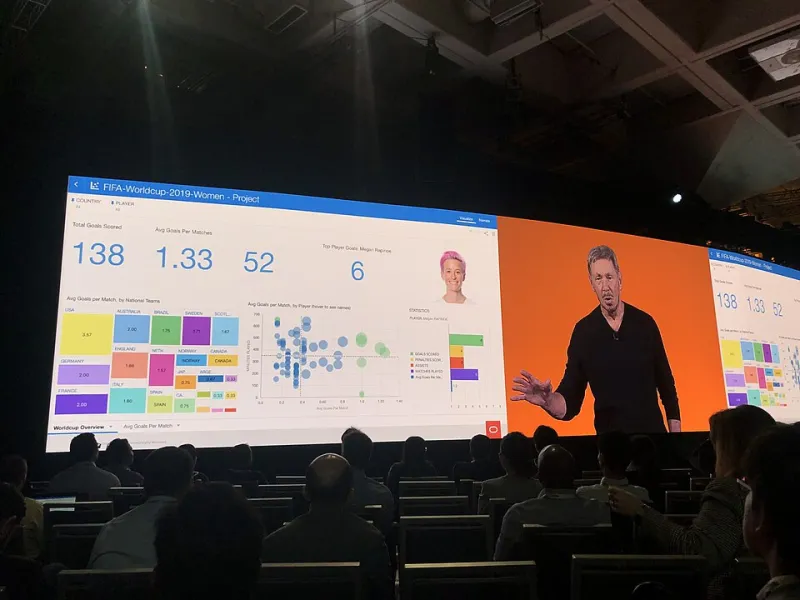
Photo: data integration business analytics dashboard team collaboration office, via img.freepik.com
The Intelligence Illusion
Most large U.S. corporations today operate with more data than any previous generation of business leaders could have imagined. Sales performance dashboards refresh in real time. Customer research panels generate continuous attitudinal data. Supply chain monitoring systems track inventory and logistics with remarkable precision. Competitive intelligence subscriptions deliver daily briefings on rival activity across dozens of market dimensions.
And yet, in a striking number of organizations, the C-suite enters critical strategic decisions without a coherent, integrated understanding of what all of that information, taken together, actually means.
The problem is not data scarcity. It is organizational fragmentation. Each intelligence function operates within its own domain, answers to its own leadership, and delivers its outputs through its own channels. The sales organization knows what customers are buying. The market research team knows what customers say they want. The supply chain function knows what the organization can realistically deliver. The competitive intelligence group knows what rivals are positioning to offer. In most enterprises, these four bodies of knowledge never formally converge.
The consequence is a condition we at Research Enterprises describe as fractured intelligence: a state in which an organization's informational assets are individually robust but collectively incoherent.
How Silos Form—and Why They Persist
Organizational silos rarely emerge from deliberate design. They are the accumulated residue of growth, acquisition, and departmental autonomy. A company that builds its sales analytics capability through one technology investment, its customer research function through a separate vendor relationship, and its competitive monitoring program through a third organizational initiative will, almost inevitably, end up with three distinct data ecosystems that were never designed to communicate with one another.
The persistence of these silos is often reinforced by departmental incentives. Intelligence teams that control proprietary data derive organizational influence from that control. Sharing data broadly—particularly with functions that might challenge a team's conclusions—can feel politically threatening. Budgetary structures that fund intelligence activities at the departmental rather than enterprise level further entrench the separation, since cross-functional integration requires resources that no single department has a clear mandate to provide.
Technology has complicated rather than resolved this dynamic. The proliferation of specialized analytics platforms has given each organizational domain increasingly powerful tools for analyzing its own data while simultaneously deepening the structural barriers to synthesis. A company might invest millions in best-in-class tools across four separate intelligence functions and still lack the integrative capacity to answer the most basic strategic questions its leadership needs addressed.
The Competitive Cost of Disconnection
The strategic consequences of fragmented intelligence are not abstract. They manifest in specific, traceable decision failures.
Consider a scenario that recurs with notable frequency in U.S. consumer goods markets. A product development team, working from customer research data, identifies strong consumer demand for a new product variant and advances it to launch. Simultaneously, the supply chain analytics team is tracking a material shortage that will constrain production of that exact variant for the following two quarters. The competitive intelligence function, operating independently, has identified that a rival is preparing to introduce a comparable product in six weeks. None of these three teams has communicated with the others.
The launch proceeds on schedule. The company captures early consumer interest, then fails to fulfill demand due to supply constraints, ceding the market window to the competitor that was already positioned to fill it. Each intelligence function performed its role competently. The failure was integrative, not analytical.
This pattern—where individually accurate intelligence produces collectively poor outcomes—is among the most underdiagnosed sources of strategic underperformance in large organizations.
A Framework for Integrated Intelligence
Breaking down intelligence silos requires deliberate architectural intervention at three levels: governance, process, and technology.
Governance is the foundational layer. Organizations that successfully integrate their intelligence functions almost universally do so by establishing a cross-functional intelligence authority—a standing body with representation from sales analytics, consumer research, competitive monitoring, and operational data functions, reporting to or directly informing the chief strategy officer. This body does not replace departmental intelligence capabilities; it creates a formal mechanism for their synthesis.
The mandate of this authority should be explicit: to produce integrated intelligence products that no single department could generate independently, and to ensure that strategic decisions of a defined magnitude are informed by cross-functional rather than siloed analysis.
Process is the operational layer. Integrated governance is ineffective without defined workflows that translate cross-functional data into actionable intelligence on a consistent cadence. This means establishing regular intelligence convergence reviews—structured sessions at which departmental analysts present their current findings in a shared context and identify intersections, contradictions, and gaps that merit further investigation.
It also means developing standardized intelligence briefs for major decision categories—new market entries, product launches, competitive responses, pricing adjustments—that specify which data domains must be consulted and how their inputs should be weighted and reconciled.
Technology is the enabling layer, not the solution layer. The temptation to resolve fragmentation through platform consolidation is understandable but frequently counterproductive. Attempting to migrate all intelligence functions onto a single technology platform introduces enormous implementation risk and often fails to account for the legitimate reasons different functions use different tools. A more pragmatic approach involves creating interoperability standards—common data taxonomies, shared API frameworks, and unified reporting templates—that allow distinct systems to contribute to a coherent analytical picture without requiring full consolidation.
From Fragmentation to Strategic Coherence
The organizations best positioned to convert intelligence into competitive advantage are not necessarily those with the largest data assets or the most sophisticated analytical tools. They are the ones that have solved the integration problem—that have built the governance structures, process disciplines, and technical architectures to ensure that what the sales team knows, what the research team discovers, what the supply chain monitors, and what the competitive intelligence function tracks all arrive at the decision table together.
In a market environment where the speed and accuracy of strategic response is an increasingly decisive competitive variable, the cost of fragmented intelligence is not merely inefficiency. It is the systematic surrender of informational advantages that the organization has already paid to acquire.
The data exists. The question is whether the enterprise is structured to use it.