The Measurement Mirage: Why Your Dashboard Is Showing You the Past While Your Market Moves Into the Future
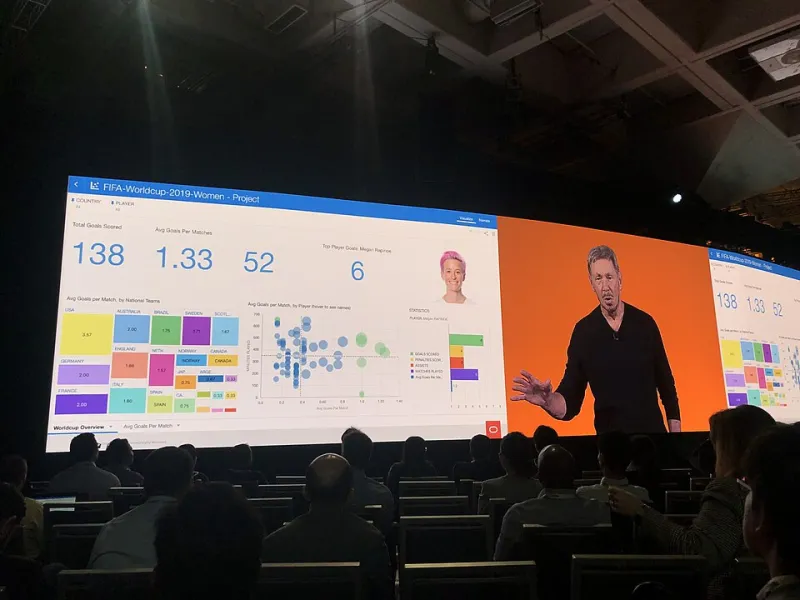
Photo: GeneralAB13, CC BY-SA 4.0, via Wikimedia Commons
The Illusion of Real-Time Visibility
The modern corporate dashboard is an engineering achievement. Aggregating sales data, customer behavior metrics, inventory flows, and market share estimates into a single visual interface represents a significant analytical advancement over the manual reporting processes of previous decades. Many U.S. executives now have access to data that refreshes hourly, or even in genuine real time.
And yet, a troubling number of those same executives find themselves consistently surprised by market developments that, in retrospect, were entirely foreseeable. Quarterly earnings calls across sectors are punctuated by variations of the same phrase: we saw headwinds begin to materialize late in the period. The data was there. The visibility was there. The foresight was not.
The explanation for this gap lies not in the quality of the data being collected, but in its fundamental orientation. Most corporate measurement systems are built around lagging indicators—metrics that document outcomes that have already occurred. Revenue figures, churn rates, market share percentages, net promoter scores: these are all records of what the market has already decided. They are, in the most precise sense, historical documents dressed up as current intelligence.
What Lagging Indicators Actually Tell You
To be clear, lagging indicators are not without value. They provide accountability, enable performance evaluation, and allow companies to track whether strategic initiatives are producing intended results. The problem is not that organizations measure them. The problem is that in many U.S. enterprises, lagging indicators constitute the overwhelming majority of what gets measured—and, more critically, what gets acted upon.
Consider the standard consumer goods company operating in a competitive U.S. retail environment. Its primary performance metrics likely include weekly sell-through rates, category share data from retail partners, and brand health scores from periodic surveys. Each of these metrics tells a coherent story about the recent past. None of them is particularly well-suited to detecting the early stages of a consumer preference shift, an emerging competitive entry, or a distribution channel disruption—precisely the developments that will define next quarter's performance.
By the time a meaningful decline in sell-through rates appears on that company's dashboard, the underlying cause—a shift in consumer behavior, a competitor's promotional strategy, a change in how a key retail partner allocates shelf space—has typically been in motion for months. The lagging indicator is not alerting the company to a problem. It is confirming one that already exists.
The Case Studies That Clarify the Stakes
The pattern repeats across industries with enough regularity to constitute a structural problem rather than an isolated failure of execution.
In the U.S. financial services sector, several mid-tier banks that lost significant ground in the mobile banking transition were, by their own internal metrics, performing adequately in the quarters immediately preceding their competitive displacement. Customer retention rates were stable. Account balances were within normal ranges. Satisfaction scores were acceptable. What those metrics failed to capture was the accelerating rate at which younger account holders were opening secondary relationships with digital-first competitors—a behavioral signal that would not manifest in the banks' core metrics until those customers began consolidating their primary banking elsewhere.
In the U.S. media and entertainment industry, the companies that struggled most acutely with the streaming transition were not, in many cases, unaware that streaming existed. They were measuring its impact through the lens of lagging indicators—subscriber cancellations, advertising revenue trends, ratings erosion—rather than through leading indicators that might have surfaced the shift in consumer time allocation years earlier.
The common thread in these cases is not a lack of data. It is a measurement architecture that was optimized to confirm existing performance rather than to anticipate future market conditions.
Distinguishing Leading Indicators That Actually Lead
The term leading indicator is used loosely enough in corporate analytics that it has lost some of its precision. For the purposes of building a genuinely predictive measurement system, it is worth being specific about what a leading indicator actually requires.
A true leading indicator must satisfy three conditions. First, it must be measurable before the outcome it predicts becomes visible in conventional performance metrics. Second, it must have a demonstrated or theoretically defensible causal relationship to that outcome—not merely a historical correlation. Third, it must be actionable within a timeframe that allows for a meaningful strategic or operational response.
Applying these criteria eliminates a substantial portion of what passes for forward-looking measurement in most organizations. Consumer sentiment indices, for instance, are frequently described as leading indicators, but their predictive relationship to specific company-level outcomes is often weak and their actionability limited. By contrast, metrics such as search query volume shifts in specific product categories, changes in the rate at which target consumers are engaging with adjacent or emerging product categories, or early adoption patterns among demographically significant consumer segments can meet all three criteria when properly specified and validated.
A Diagnostic Framework for Measurement Redesign
Reorienting a corporate measurement system toward genuine leading indicators is not a matter of replacing existing dashboards wholesale. It is a matter of systematically interrogating the metrics currently in use and identifying where the measurement architecture has gaps.
A practical diagnostic process begins with a single question applied to each metric on a company's primary dashboard: At what point in a market shift would this metric first register a meaningful change? If the honest answer is after the shift has already affected revenue or share, the metric is a lagging indicator, regardless of how it is labeled internally.
The second step is to map the causal chain that connects consumer behavior or competitive activity to the outcomes those lagging indicators track, and then identify observable signals that appear earlier in that chain. This is fundamentally an intelligence design exercise, not a data engineering one. It requires a clear theory of how the market works—what drives consumer decisions, how competitive dynamics unfold, where channel behavior originates—before it requires any new data infrastructure.
Finally, organizations should establish explicit protocols for how leading indicator signals translate into decision triggers. A leading indicator that surfaces a market shift six months in advance is only valuable if there is an organizational process for acting on it within that window. Without that process, early warning data becomes historical data by the time it influences strategy.
Measuring What the Market Is Becoming
The fundamental challenge of corporate measurement is that markets reward anticipation and penalize reaction. A dashboard built entirely around lagging indicators is, in structural terms, a tool for managing yesterday's business. In stable, slow-moving markets, the cost of that orientation is modest. In the fast-moving, competitively dense U.S. market environment that defines most industries today, it is a material strategic disadvantage.
The companies that consistently outperform their sectors over extended periods are rarely those with the most sophisticated reporting of historical performance. They are the ones that have invested in understanding what their markets are becoming—and built the measurement systems capable of detecting that trajectory early enough to matter.