Somebody in the Building Should Be Paid to Doubt You
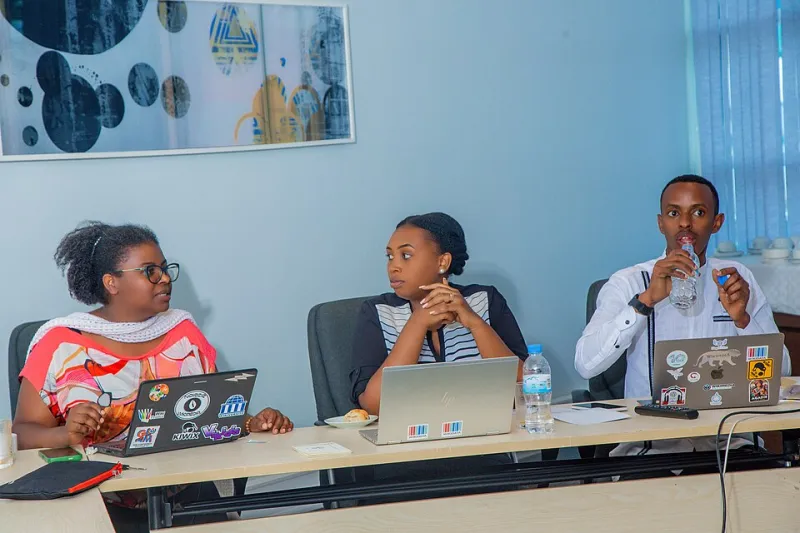
Photo: Pixel planet, CC BY 4.0, via Wikimedia Commons
There is a moment in most corporate research engagements when the brief stops describing a question and starts describing an answer. The sponsor explains the strategy, explains the evidence that will support it, and asks, reasonably enough, for confirmation at scale. What follows is a well-executed study that could not, under any design, have returned a verdict of no.
We write this as an argument, not a complaint. Confirmation research has legitimate uses: sizing an opportunity, testing executional detail, building internal alignment. But it has been permitted to occupy nearly the whole field, and the cost of that monopoly is now visible in boardrooms across the country in the form of expensive surprises that were, in principle, discoverable.
The Brief That Already Knows
Read a stack of research briefs from any large US company and count how many contain a falsifiable statement. Most contain objectives, not hypotheses. The difference matters. An objective asks, "What do customers think about our new service tier?" A hypothesis says, "We believe mid-market buyers will pay a premium for same-day onboarding, and we expect to be wrong if onboarding is not the binding constraint."
The second version can lose. The first cannot. When a study is unable to lose, its findings are not evidence — they are decoration.
Why Confirmation Wins by Default
Three forces push toward agreement, and none of them involves bad faith.
The first is authorship. The people who commission research are usually the people who proposed the strategy. Asking them to fund a study that might embarrass their own recommendation requires a kind of institutional confidence that is uncommon.
The second is the supplier relationship. Research firms are selected, in large part, on judgment and client sense. Being right about a pleasant conclusion and wrong about an unwelcome one carry asymmetric commercial consequences, and everyone in the room understands this without anyone saying it.
The third is the meeting. Findings that threaten a committed program are not usually rejected; they are reframed as nuance, deferred to a follow-up study, or absorbed into a slide titled "Considerations." The information arrived. The organization simply had no pathway for it to do anything.
What Adversarial Research Looks Like in Practice
Adversarial research is not pessimism, and it is not a contrarian posture adopted to seem rigorous. It is a set of deliberate design choices aimed at making a favored conclusion testable.
Red-team studies. A separate engagement, with a separate brief, whose stated objective is to construct the strongest available case against a proposed course of action. It receives the same access to data and respondents as the primary study and is staffed independently enough that its authors do not answer to the strategy's sponsor.
Disconfirming evidence searches. Before a study is fielded, ask what result would change the decision, then verify that the instrument is capable of producing it. If the survey cannot capture a category of respondent who would plausibly disagree, the study is not measuring a market. It is measuring an echo.
Structured pre-mortems. Assume the launch has failed eighteen months out and ask the people closest to the work to write the postmortem. Executed properly, with anonymity and a mandate to be specific, this exercise surfaces risks that no risk register captured.
The designated skeptic. One named individual, senior enough to be inconvenient, whose formal role on a major initiative is to articulate the strongest counterargument at each gate — and who is evaluated on the quality of that dissent, not on whether it was overruled.
Four Rules That Keep Dissent From Becoming Theater
Adversarial research fails in a predictable way: it becomes ritual. A skeptic is appointed, murmurs a caveat, is thanked, and the program proceeds precisely as planned. Four constraints help prevent this.
- Dissent needs a budget. A red team funded from discretionary goodwill will be small, late, and ignored. Give it a line item and a delivery date that precede the commitment decision.
- Dissent needs a response obligation. Require the sponsor to answer the adversary's top three findings in writing. Not to accept them — to answer them, on the record.
- Dissent needs independence of consequence. A skeptic whose next assignment depends on the sponsor's goodwill is not a skeptic. Rotation, separate reporting lines, or external staffing all solve this at modest cost.
- Dissent needs a scoreboard. Track which adversarial findings later proved correct. Organizations that do this discover their skeptics were right more often than anyone remembered, which is precisely the institutional memory that gets lost.
The Accounting
A red-team engagement of meaningful scope typically costs a fraction of a single market entry's marketing spend. The comparison is not rhetorical. The failures that adversarial research catches — a demand assumption borrowed from an adjacent category, a competitor capability nobody verified, a regulatory constraint sitting in a footnote — are the ones that consume entire planning cycles when discovered late.
There is also a cultural return that is harder to quantify. Organizations that institutionalize doubt tend to produce better questions. Analysts stop writing summaries designed to survive review and start writing findings that prompt argument. That shift is worth more than any single study, and it does not happen by accident. It happens because someone in the building has been given permission — and a mandate — to disagree.